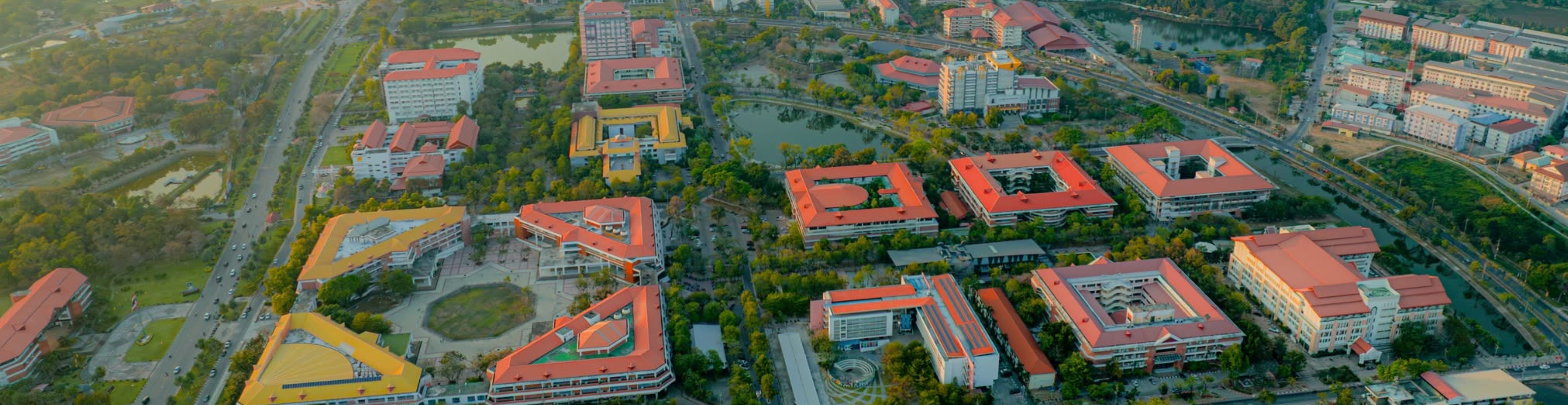
Welcome to UI Green. Mahasarakham University is located in Maha Sarakham province, the heart of North East Thailand. The university has five campus sites covering over 5,325,600 m².
มหาวิทยาลัยมหาสารคามประกอบด้วย 5 พื้นที่วิทยาเขตที่แตกต่างและเชื่อมโยงกัน ครอบคลุมพื้นที่กว่า 5,325,600 ตารางเมตร
ศูนย์กลางการบริหารและวิชาการหลัก ประกอบด้วย 15 คณะและ 2 วิทยาลัย
พื้นที่วิทยาเขตดั้งเดิมแห่งแรกก่อตั้ง ประกอบด้วย 4 คณะวิชาหลัก
พื้นที่ป่าไม้และเกษตรกรรม ใช้สำหรับการวิจัยและบริการวิชาการด้านสัตว์และพืช
พื้นที่ป่าชุมชนกว่า 80% ศูนย์เรียนรู้เศรษฐกิจพอเพียงและสมุนไพร
พื้นที่ชุ่มน้ำริมแม่น้ำชี เหมาะแก่การศึกษาธรรมชาติและกิจกรรมแคมป์ปิ้ง
The historical development of Mahasarakham University, or MSU, may be traced back to March 27, 1968, when it was originally established as the College of Education, Mahasarakham, for the purpose of extending higher education to the nation's Northeastern region.
Situated in an outer area north of Maha Sarakham, a small town right at the center of the region, the college functioned to produce quality teachers to serve educational institutions of all levels. The university finally gained independent status and became Mahasarakham University, Thailand's 22nd government university, on December 9, 1994.
Mahasarakham University has since expanded rapidly in terms of both facilities and academic services and has become a comprehensive university, offering undergraduate and post-graduate degree programs in three academic clusters: Social Sciences; Pure and Applied Science; and Health Science.
Since 2011 to the present, a number of international organizations have considered MSU as the "fastest-growing world-class recognized university in Thailand."
Originally established as the College of Education, Mahasarakham for extending higher education to the nation's Northeastern region.
Became a regional campus of Srinakharinwirot University with four faculties: Education, Humanities, Social Sciences and Science.
Became Mahasarakham University, Thailand's 22nd government university, authorized by His Majesty King Bhumibol Adulyadej.
Set up in Kantarawichai District, approximately seven kilometers from the original campus to support rapid expansion.
18 faculties, 2 colleges, 1 school operating. Enrollment increased from fewer than 10,000 to more than 40,000 students. 15 academic service centers in Northeastern provinces.
Mahasarakham University (MSU) was originally established as the College of Education in 1968. The college's status was later elevated when it became a regional campus of Srinakharinwirot University in 1974. The original campus "City campus" covers 589,600 m² with the buildings of the 4 faculties.
In 1998, Khamriang Campus was set up in Khamriang sub-district, Kantarawichai District, approximately seven kilometers from the original campus. Fifteen faculties and two colleges are located in this campus with all administrative buildings. It is now the central hub and academic center of the university.
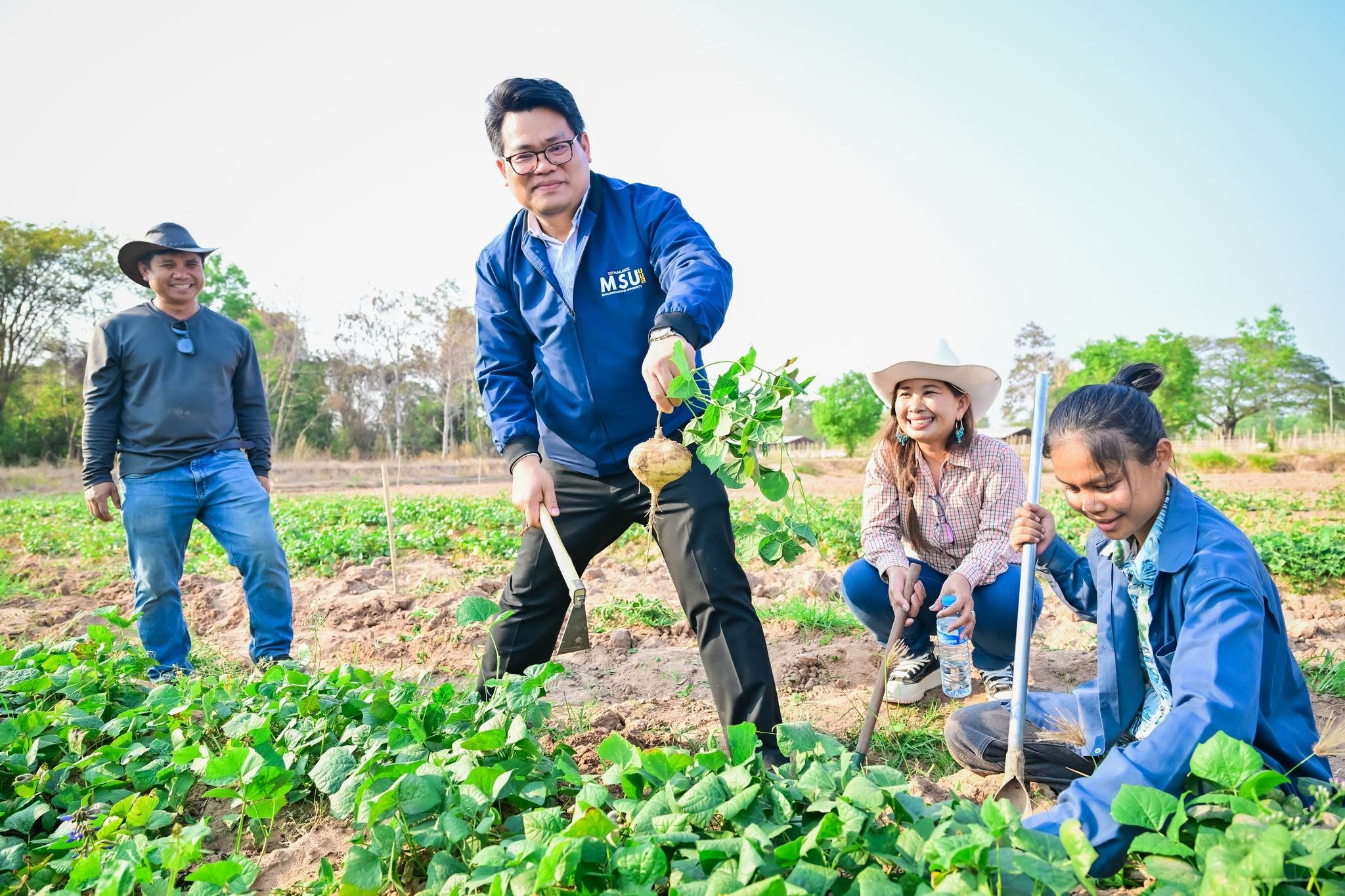
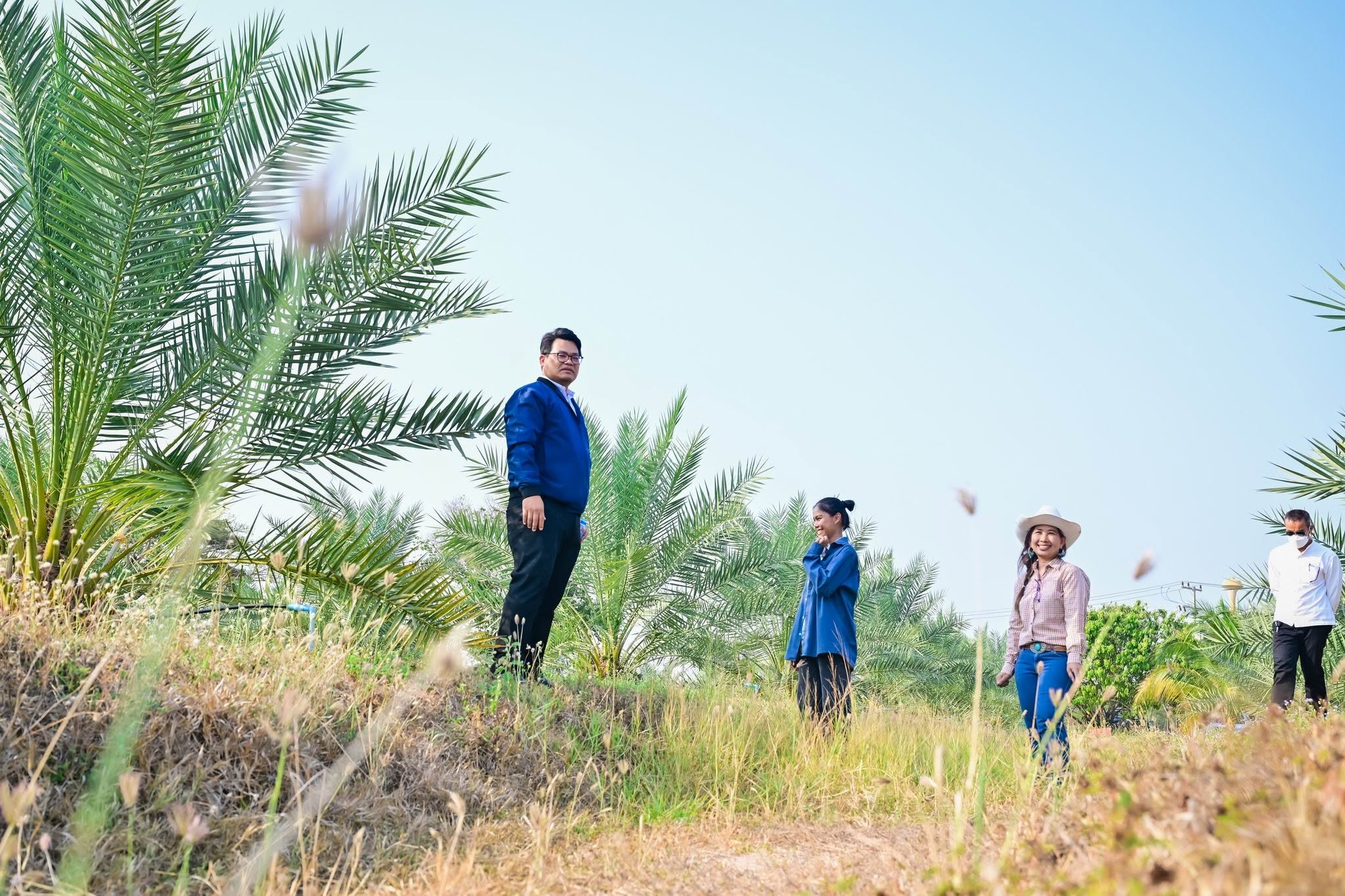
Na-sinuan campus site covers forest and planted vegetation areas of the university with the area of 1,400,000 m². It is used for farming of livestock, crop, and fruits and vegetables to provide educational service (mainly for the Faculty of Technology and Faculty of Veterinary), research activities, and academic services to the society and local communities.
Mainly serves the Faculty of Technology and Faculty of Veterinary for practical education and research.
Located in Nadoon district. Over 80% of the area is the forest which is used by both community and university. Asarn house museum, a learning center of sufficient economy, guesthouse, and a laboratory building for medical plants were constructed for all missions of the university.
Located in Ban-kerng sub-district. It is a wetland surrounded by Chi river where a diversity of plants are found. This campus provides not only the academic activities but also the trip for hiking and camping.
สัมผัสประสบการณ์พื้นที่และโครงสร้างพื้นฐานของมหาวิทยาลัยมหาสารคามผ่านวิดีโอแนะนำ
Setting & Infrastructure — MSU
Mahasarakham University Official
To further extend its academic services to remote communities, the University now has 15 academic service centers in Northeastern provinces, ensuring that quality education and research reach every corner of the region.